
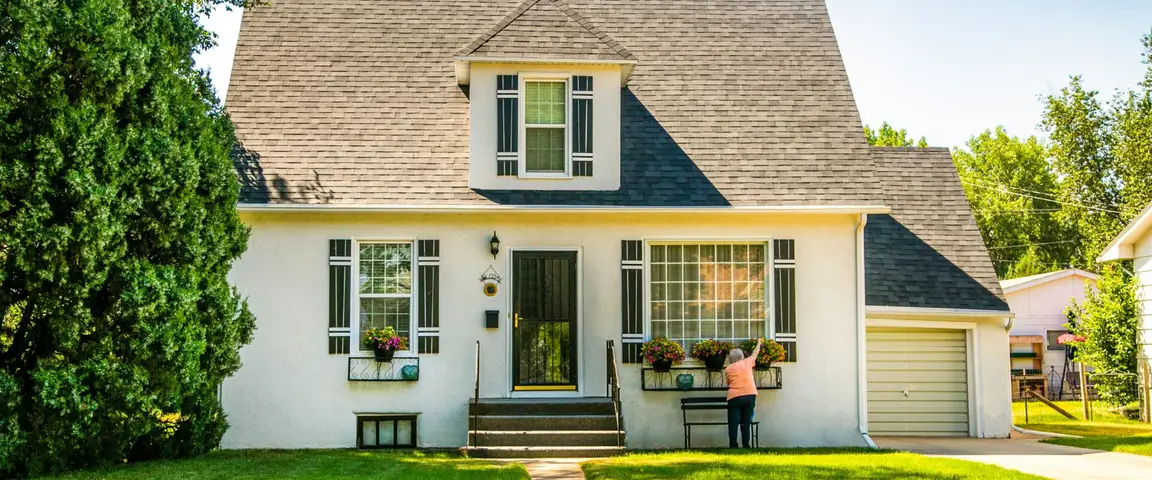
 If you’ve suddenly inherited a house, you may not be prepared for the questions and issues that can arise. And if you make the wrong decisions, you will likely encounter financial, emotional, and family problems before long.
Forewarned is forearmed, they say, so here’s some of what can go wrong when you inherit a house in Colorado.
What Can Go Wrong When You Inherit a House in Colorado
You May Owe More Taxes than Anticipated
Most people don’t have to worry about estate tax because of the very high exemption (in the millions), and the estate tax was even temporarily suspended on 2010. But also mostly suspended in 2010 was the step-up provision. So in considering what can go wrong when you inherit a house in Colorado and when you intend to sell it, you need to consider the stepped-up capital gains situation.
The step-up provides that you pay capital gains taxes only on the gains above the fair market value at the date of the decedent’s death. It has nothing to with the price the decedent paid for the house – unless the step-up falls in one of the years when it was changed. In that case, you may owe a lot more in taxes than you bargained for.
The Mortgage May Be Bigger than You Thought
Generally in the past, when an elderly parent or relative passed, the mortgage on their house was paid off. These days, though, it’s common for elderly people to take out a reverse mortgage on their home to supplement insufficient retirement funds.
You need to be aware, then, that a reverse mortgage cannot be assumed by heirs. And in the case of a standard mortgage, you can assume the mortgage only if you live in the house yourself. So if you intend to rent the house, you may have to refinance it in your own name.
The House May Need Repairs and Upgrades
With respect to what can go wrong when you inherit a house in Colorado, this one may be the most costly. Most of the time, people inherit a house from a deceased elderly parent or very close relative. Besides not having the physical ability to perform maintenance and upgrades, many elderly people don’t have the money for it either. And if they do, they may simply choose not to because they know they won’t be living in the house very many more years.
If you plan to live in the inherited house, this may not be a huge concern. But if you intend to rent it or sell it, you’ll have to make repairs to make it presentable and upgrades to bring it up to code and meet other legal and insurance requirements. Installing a new HVAC system or re-wiring the house will involve a big chunk of money.
You May Have Problems with Relatives and Joint Heirs
But what if you’re not the only heir? That can be a problem. Suppose you and your siblings inherited the house jointly. If you want to sell it, your brother may want to rent it, and your other brother, to live in it himself. You can see what a powder keg waiting for a spark this is.
In most states, joint heirs of a home are considered tenants in common, and one heir can force a sale if it comes to that. The process, however, is expensive, and the emotional and familial consequences are likely to be highly unpleasant.
So what can go wrong when you inherit a house in Colorado? Quite a lot, actually, if you’re not up to speed on tax laws, mortgages, and upgrade issues. It is best to contact a qualified professional to help head off these issue quickly.
We’re ready to help you reach your real estate goals and will be glad to answer any and all questions. Contact us by phone at 970-682-3306 or fill out the online form.
Dealing with an inherited or probate property? We buy inherited houses across Colorado, work with personal representatives and estate attorneys, and can close remotely if the family lives out of state. Read our Colorado probate and title answers or get a no-obligation offer.
The Colorado rules that cause most of the trouble
Your interest is real, but it sits behind the estate
C.R.S. 15-12-101 says property “devolves” at death to the devisees or heirs subject to exempt property and family allowances, the rights of creditors, the surviving spouse’s elective share, and administration. Everything that goes wrong with an inherited Colorado house traces back to one of those five words.
It means an heir who has been paying the mortgage and mowing the lawn for eight months still cannot sell, because having an interest is not the same as having authority to convey.
Only letters give authority to convey
C.R.S. 15-12-103: a person acquires the powers of a personal representative only on being appointed, qualifying, and being issued letters. In an informal proceeding the probate registrar issues them on Judicial Branch form JDF 915, which states on its face that the letters are proof of authority and carries a checkbox for whether that authority is restricted.
Read that checkbox. A restricted set of letters is the quiet reason a closing falls apart in the final week.
With unrestricted letters the PR has “the same power over the title to property of the estate that an absolute owner would have,” exercisable “without notice, hearing, or order of court” (C.R.S. 15-12-711), and the enumerated power to sell and convey at C.R.S. 15-1-804(2)(g)(I).
Four limits that catch families out
- Specifically devised property. The general sale power under C.R.S. 15-1-804(2)(g) does not reach a house the will leaves to a named person. If the will devises the house specifically, the PR cannot simply sell it under the general power.
- Restrictions in the will, or an order in a formal proceeding (C.R.S. 15-12-715(1)).
- Supervised administration. The court keeps authority until it approves distribution (C.R.S. 15-12-501). A supervised PR has the general powers without interim orders but cannot transfer assets to a distributee without a prior court order, and restrictions must be endorsed on the letters to bind a good-faith third party (15-12-504).
- Creditors. The estate’s creditors come ahead of the heirs under 15-12-101, and the PR holds the power over title “in trust” for them under 15-12-711. Distributing or selling as though they do not exist creates personal exposure for the PR.
The small estate affidavit does not transfer a house
This is the most common wrong turn and it costs weeks. C.R.S. 15-12-1201 covers collection of a decedent’s personal property by affidavit. Judicial Branch form JDF 999 says on its face that the affidavit is not valid for the transfer of real estate, and JDF 998 repeats it. The threshold adjusts annually under C.R.S. 15-10-112 and keys to the year of death, not the filing year: $88,000 for 2026 deaths, $86,000 for 2025, measured net of liens and encumbrances. Inside the threshold it moves bank accounts and vehicles. It never moves land.
Contracting early is fine. Closing early is not.
C.R.S. 15-12-701 provides that a PR’s powers “relate back in time to give acts by the person appointed that are beneficial to the estate occurring prior to appointment the same effect as those occurring thereafter,” and that a PR “may ratify and accept acts on behalf of the estate done by others where the acts would have been proper for a personal representative.”
So the house can be listed and put under contract before probate is opened, then ratified. The deed waits for letters, and so does the title policy. A contract with a fixed closing date and no probate contingency is how this goes wrong.
Buyers are protected, so the risk sits with you
C.R.S. 15-12-714(1): a person who in good faith deals with a PR for value “is protected as if the personal representative properly exercised his power.” C.R.S. 15-12-910: a purchaser who acquires distributed property for value takes title free of the rights of any interested person in the estate, “whether or not the distribution was proper or supported by court order,” and “need not inquire whether a personal representative acted properly.”
Those protections are what make probate sales closeable. They also mean a conveyance made without proper authority is not unwound against the buyer, and the consequences land on the personal representative and the heirs instead. Which is the real argument for getting the authority right before anything is signed.
Check whether probate is needed at all
Order the vesting deed from the county clerk and recorder before anything else. If the house was held in joint tenancy with right of survivorship, passed by a recorded beneficiary deed, or was titled in a revocable trust, it is outside the probate estate and most of this page does not apply to you.
Statutes cited above are current through the 2026 Colorado legislative session. Figures that move on a schedule should be confirmed for your year. This is general information about Colorado law, not legal advice — have a Colorado attorney or title professional review anything you intend to rely on.
Related guides
- Selling a Parent’s Home Before Death in Colorado: A Comprehensive Guide
- Can You Sell a House With a Quitclaim Deed in Colorado?
- How to Transfer a Deed on Inherited Property in Colorado
We buy inherited and probate property throughout Northern Colorado and the Denver metro, including Arvada, Westminster and Broomfield. See every Colorado city we buy in.
Written by Luke Angerhofer, founder of Grail Capital and an active Colorado employing real estate broker (licence ER 100018905, issued 2007). Luke began his career as a licensed Colorado real estate appraiser and has been buying houses directly from Front Range homeowners since founding Grail Capital in 2016. Grail Capital buys across Northern Colorado and the Denver metro. This article is general information about Colorado real estate and is not legal, tax or financial advice. More about Luke and Grail Capital.