
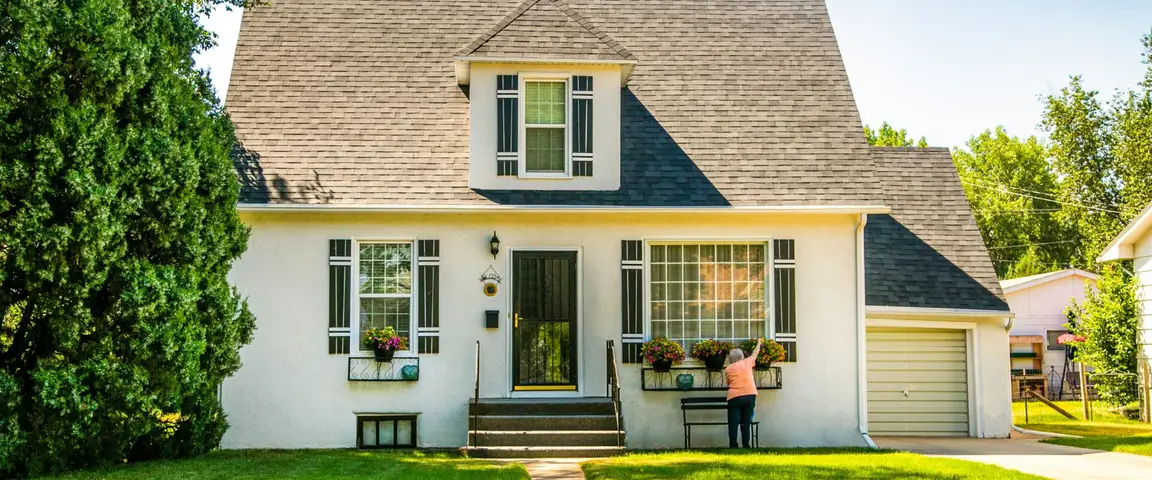
 The answer to the often-asked question “Can a house be sold while it is in probate in Fort Collins Colorado?” is “Yes.”
But you must adhere carefully to your state’s pertinent rules and regulations. The probate court will monitor every step and all aspects of the sale, and if you’re the executor, you, too, must monitor and approve all the terms of the sale. It can be a complex process, but understanding it will make things a little smoother.
Can A House Be Sold While In Probate In Fort Collins Colorado?
Appointment of Administrator/Executor
If the decedent’s will designated a specific person as the executor and that person is willing to act in that capacity, then he or she is officially appointed as the executor. If on the other hand, no one has been designated as executor in the will, then the court and/or other relatives will appoint a near relative to act as administrator.
Appraisal
The next step is to have the property appraised. But you must make sure the appraiser you choose is a licensed, reputable appraiser. The property must sell at a price that is at least 90% of the appraised value, so you need an appraiser who can get it right.
Sale
This is the step where the answer to “Can a house be sold while it is in probate in Fort Collins Colorado?” begins to become a reality. And you’ll start by having your agent list the house on a multiple listing service so that buyers will know it’s a probate sale.
An interested buyer makes an offer along with a 10% deposit, an offer which you can accept or reject. If you do accept it, the offer is then subject to court confirmation. You must submit the offer through your probate attorney to the court for confirmation. If everyone is in agreement, then a date is set for the sale to be finalized in court.
When the offer on the house in probate has been accepted and confirmed by the court, a Notice of Proposed Action must be mailed to all the heirs. This document states all the terms and conditions of the proposed sale. Heirs then have 15 days to review the notice and raise objections if they have any. If none of the heirs has any objections, the sale can go forward without a court hearing.
Overbidding
Now, here’s where it gets a little complicated. Before the court confirms and approves the original buyer’s offer, the judge will ask those present in the courtroom if any of them would like to bid on the property. If no one does, then the sale proceeds in the standard fashion mentioned above.
If, however, there is an overbid, the original buyer’s 10% deposit must be refunded before the new sale at the new bid price can proceed. When the overbid is accepted, the new buyer must then put up a 10% deposit, which is required to be a cashier’s check. This check for the accepted overbid deposit is presented to the executor/administrator at the winning bidder’s acceptance hearing.
Upon court confirmation and approval, a contract can then be signed. But it is a specialized kind of sale contract because it cannot have any contingencies, and escrow closes soon after the hearing, usually within 15 days.
As you can see, there are some complicated rules for selling a house while in probate. It is advised to consider contacting an attorney for more specific help.
We’re ready to help you reach your real estate goals and will be glad to answer any and all questions. Contact us by phone at 970-682-3306 or fill out the online form.
Dealing with an inherited or probate property? We buy inherited houses across Colorado, work with personal representatives and estate attorneys, and can close remotely if the family lives out of state. Read our Colorado probate and title answers or get a no-obligation offer.
Who has authority to sell, and what proves it, by statute
The personal representative usually does not need a court order
This surprises people, and it is the single most useful thing to know about selling a Colorado probate house.
C.R.S. 15-12-711 provides that until the appointment terminates, a personal representative “has the same power over the title to property of the estate that an absolute owner would have,” in trust for creditors and others interested in the estate, and then says plainly: “This power may be exercised without notice, hearing, or order of court.”
The enumerated power to sell and convey comes from the Colorado Fiduciaries’ Powers Act rather than from the probate code itself. C.R.S. 15-1-804(2)(g)(I) authorizes a fiduciary “to grant options to sell and to sell and convey” at public or private sale, for cash or on credit, on fair and reasonable terms, and 15-1-802(3)(a)(I) expressly includes personal representatives in the definition of fiduciary.
Three limits on that:
- It does not apply to specifically devised property. If the will leaves the house to a named person, the general sale power does not reach it.
- It yields to restrictions in the will or an order entered in a formal proceeding (C.R.S. 15-12-715(1)).
- Under supervised administration, the court retains authority until it approves distribution (C.R.S. 15-12-501). A supervised PR still has the general powers without interim orders, but may not transfer estate assets to a distributee without a prior court order, and any court-imposed restriction must be endorsed on the letters to bind a good-faith third party (15-12-504).
Letters are the document the title company will ask for
C.R.S. 15-12-103: to acquire the powers and duties of a personal representative, a person “must be appointed by order of the court or registrar, qualify, and be issued letters.” Administration of an estate is commenced by the issuance of letters. “Letters” includes letters testamentary and letters of administration (15-10-201(31)).
In an informal proceeding, letters are issued by the probate registrar, not a judge. Colorado Judicial Branch form JDF 915 is signed on the line for “Probate Registrar / (Deputy) Clerk of Court,” and it states on its face that the letters are proof of the personal representative’s authority to act. The form has checkboxes for whether the PR’s authority is unrestricted or restricted, which is exactly what a closer reads.
Get certified copies, and get more than one. Title companies generally want a recently certified set, and the clerk charges a fee per certified copy.
Informal versus formal probate does not change the power to sell
Informal proceedings are conducted without notice to interested persons by an officer of the court acting as registrar (C.R.S. 15-10-201(26)); formal proceedings are conducted before a judge with notice to interested persons (15-10-201(21)). Informal probate is opened by application (JDF 910); formal probate is opened by petition (JDF 920) with a hearing date.
The PR’s power to convey is identical under both, because letters issue in both and C.R.S. 15-12-711 applies the same way. The route matters only when the will restricts the PR, the estate is supervised, the original will cannot be found and only a copy exists (which requires formal), or a title underwriter wants a court order because of a contested record or disputed heirship.
Can you list the house before probate is open?
Yes, with one hard line. C.R.S. 15-12-701 provides that a personal representative’s powers “relate back in time to give acts by the person appointed that are beneficial to the estate occurring prior to appointment the same effect as those occurring thereafter,” and that a PR “may ratify and accept acts on behalf of the estate done by others where the acts would have been proper for a personal representative.”
So a listing agreement can be signed and a purchase contract entered and later ratified. What cannot happen is the conveyance: without issued letters there is no authority to convey (C.R.S. 15-12-103), and no title company will insure the deed. Build the probate timeline into the contract rather than hoping.
A buyer dealing with the PR is well protected once letters exist. C.R.S. 15-12-714(1) provides that a person who in good faith deals with a personal representative for value “is protected as if the personal representative properly exercised his power,” and that no provision in a will or court order purporting to limit the PR’s power is effective except as to persons with actual knowledge of it, the exception being restrictions endorsed on a supervised PR’s letters.
The small estate affidavit cannot transfer a house
This is the most common wrong turn. C.R.S. 15-12-1201 allows collection of a decedent’s personal property by affidavit, and the Judicial Branch forms say so in terms: JDF 999 states “This affidavit is not valid for the transfer of real estate,” and JDF 998 states the affidavit “cannot be used to transfer real estate.”
The threshold is twice the exempt-property amount in C.R.S. 15-11-403, as adjusted annually under C.R.S. 15-10-112, and it keys to the year of death rather than the year you file. Per JDF 998 as revised March 2026: $88,000 for 2026 deaths, $86,000 for 2025, $82,000 for 2024, $80,000 for 2023. The test is measured net of liens and encumbrances, and the affidavit is not filed with the court. Even inside the threshold, it moves bank accounts and vehicles, not land.
The one real-property use is narrow: where the decedent held a note or deed of trust that is a lien against someone else’s real estate, the affidavit plus a death certificate gets recorded with the clerk and recorder in the county where that real estate sits (C.R.S. 15-12-1201(3.5)). That releases a lien the decedent owned. It does not convey a house.
When no probate is needed at all
Nothing above applies if the house passes outside the estate: joint tenancy with right of survivorship, a recorded beneficiary deed, or title held in a revocable trust. The Judicial Branch guidance on opening an estate treats joint-tenancy and beneficiary-deed property as excluded when deciding whether a court filing is needed at all. Pull the vesting deed before you assume you need probate.
Statutes cited above are current through the 2026 Colorado legislative session. Figures that move on a schedule should be confirmed for your year. This is general information about Colorado law, not legal advice — have a Colorado attorney or title professional review anything you intend to rely on.
Related guides
- What happens when you inherit a house in Colorado?
- What Can Go Wrong When You Inherit a House in Colorado
- Selling a Parent’s Home Before Death in Colorado: A Comprehensive Guide
- Situations Where Selling Your Colorado House Fast Makes Sense
We buy inherited and probate property throughout Northern Colorado and the Denver metro, including Arvada, Westminster and Broomfield. See every Colorado city we buy in.
Written by Luke Angerhofer, founder of Grail Capital and an active Colorado employing real estate broker (licence ER 100018905, issued 2007). Luke began his career as a licensed Colorado real estate appraiser and has been buying houses directly from Front Range homeowners since founding Grail Capital in 2016. Grail Capital buys across Northern Colorado and the Denver metro. This article is general information about Colorado real estate and is not legal, tax or financial advice. More about Luke and Grail Capital.